
Planting & Replanting
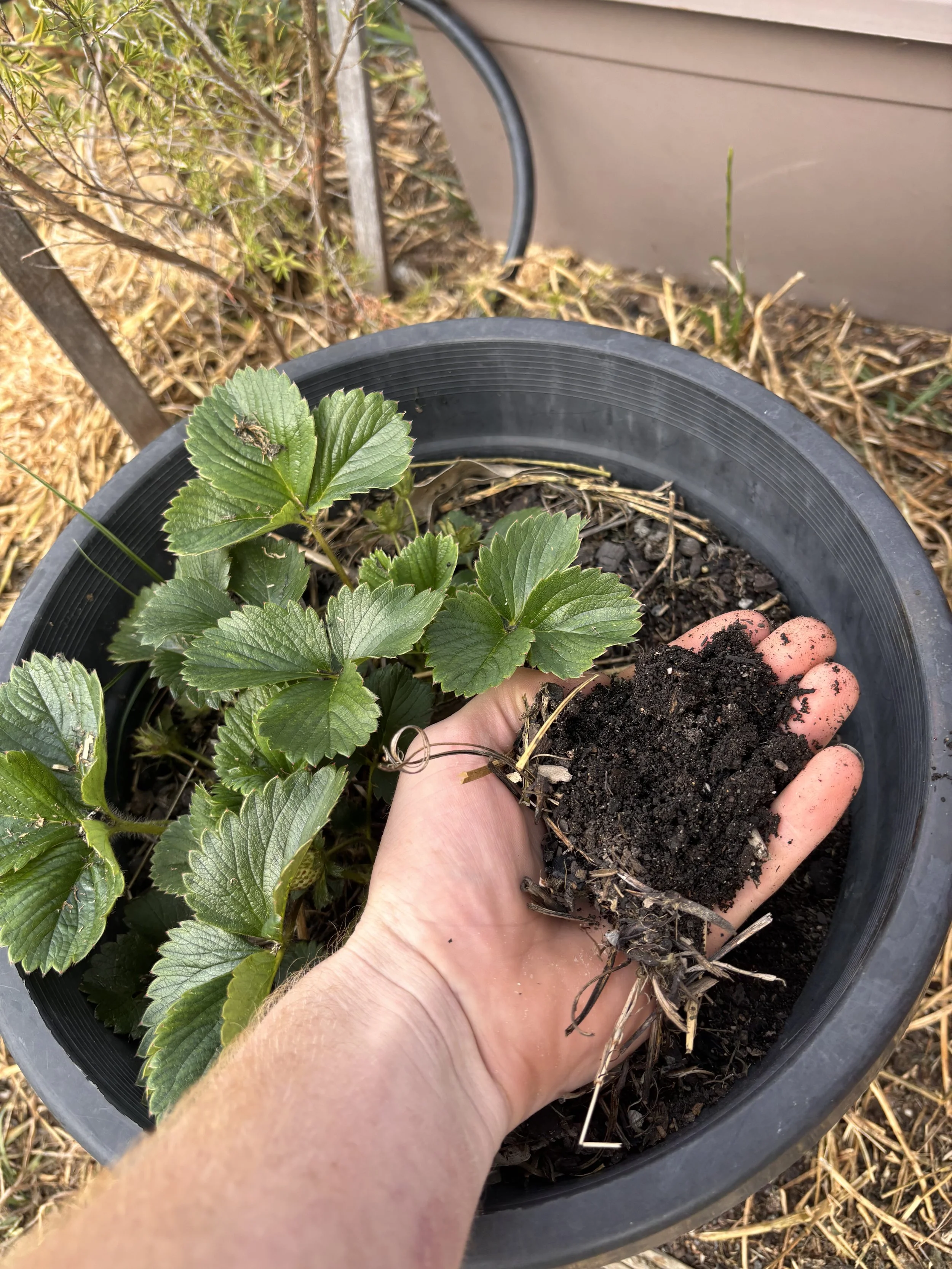
Good planting starts with proper preparation
Canberra’s clay soils often restrict drainage and root development, so every planting job begins with understanding the site, improving the soil, and choosing climate-suited plants.
SITE ASSESSMENT
• Determine soil type: clay, sandy loam, fill, etc.
• Assess drainage, sun exposure, and root competition.
• Consider microclimate and long-term growth patterns.
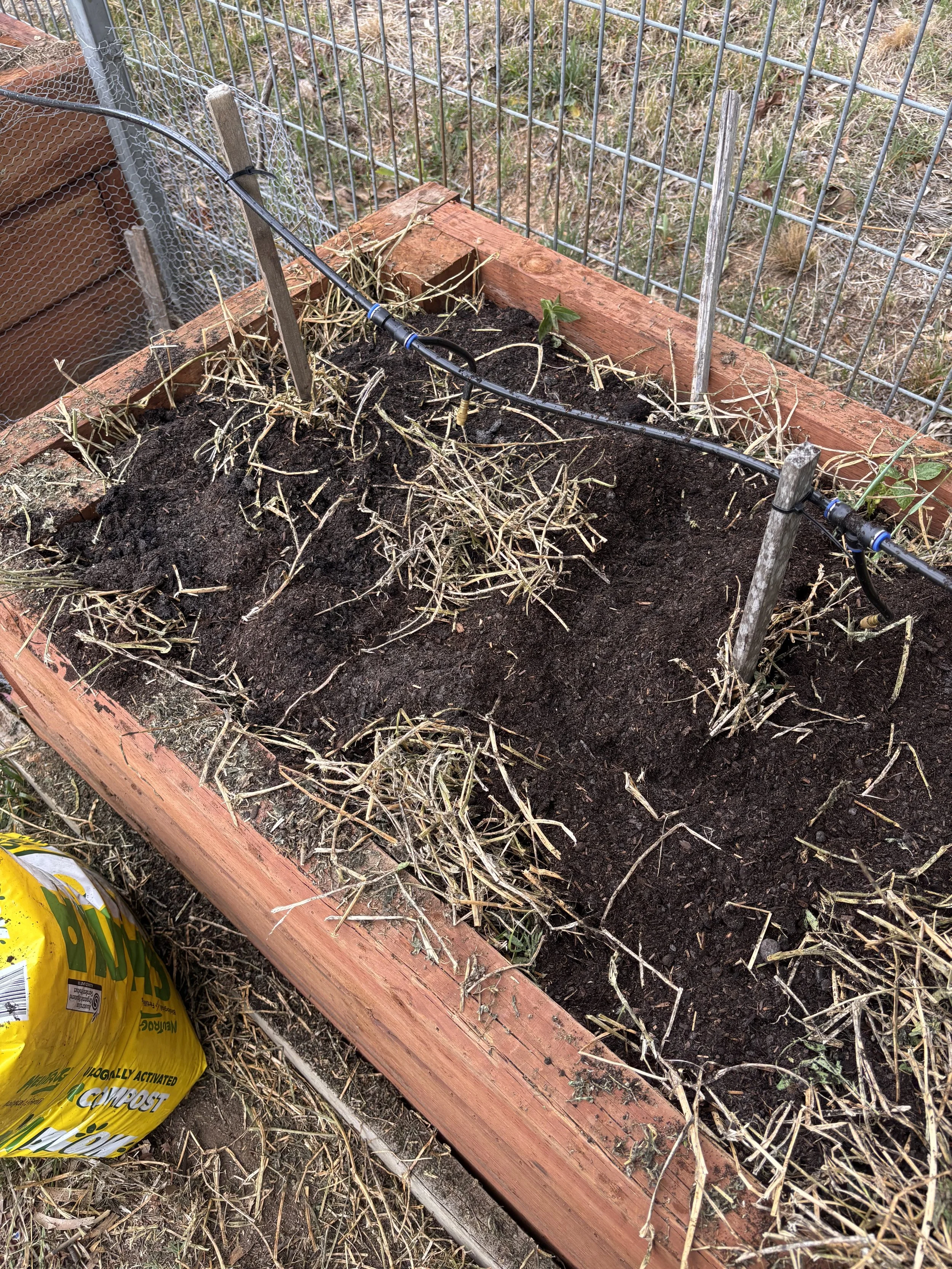
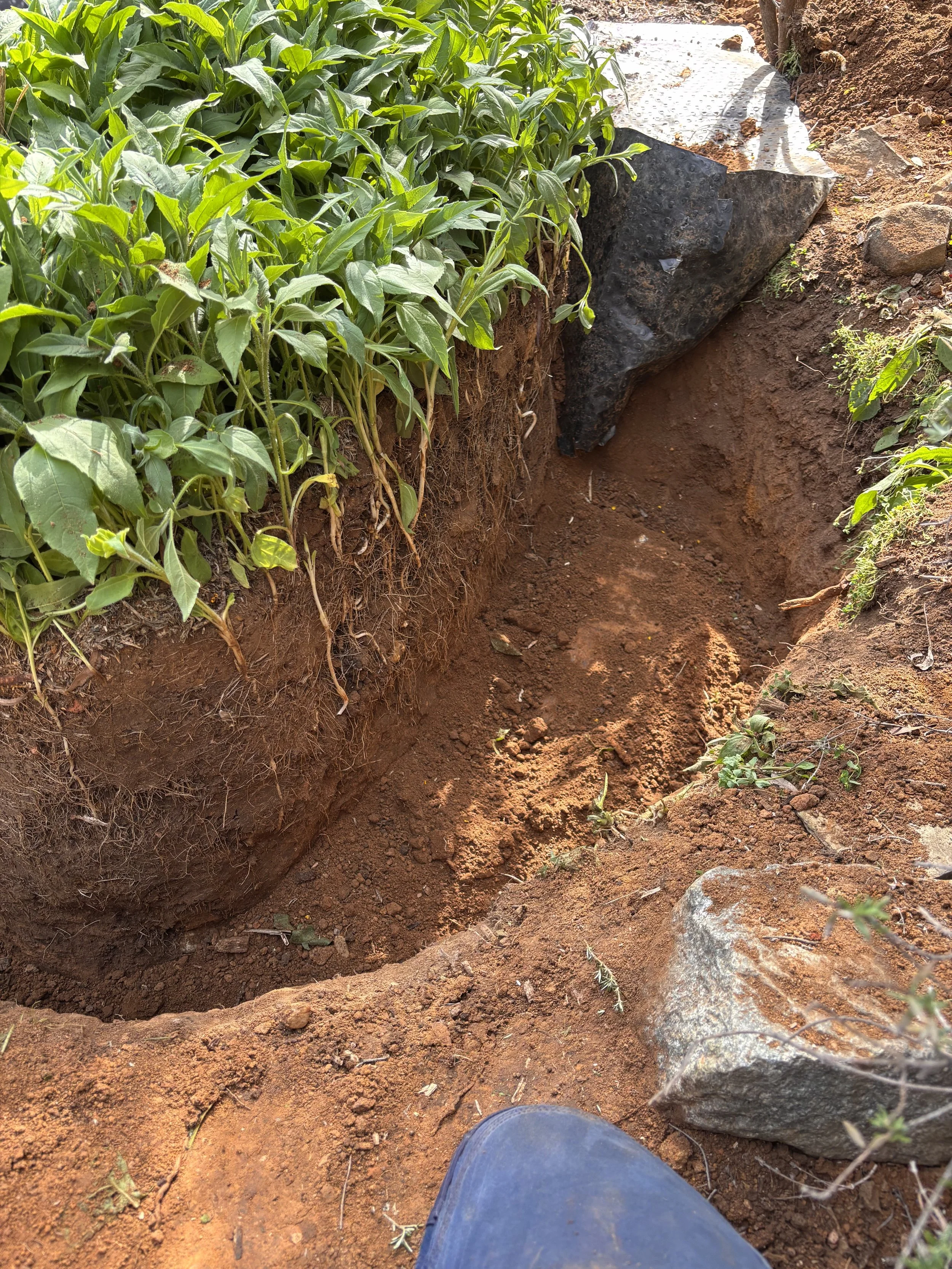
CLAY SOIL PREPARATION
• Loosen soil well beyond the planting hole.
• Break through hardpan layers.
• Add compost, coarse material, and organics to avoid the clay bowl effect.
• Add gypsum to separate clay particles and enhance drainage.
• Incorporate humic/fulvic acids for root establishment and microbial activity.
PLANTING PROCESS
• Correct root teasing and hole depth.
• Blended backfill for nutrient availability.
• Deep watering-in to remove air pockets.
• Light shaping for structural training.
PLANT SELECTION
• Hardy native shrubs, grasses, and groundcovers.
• Cottage favourites suited to frost and drought.
• Plants chosen for longevity, foliage balance, and appropriate size.
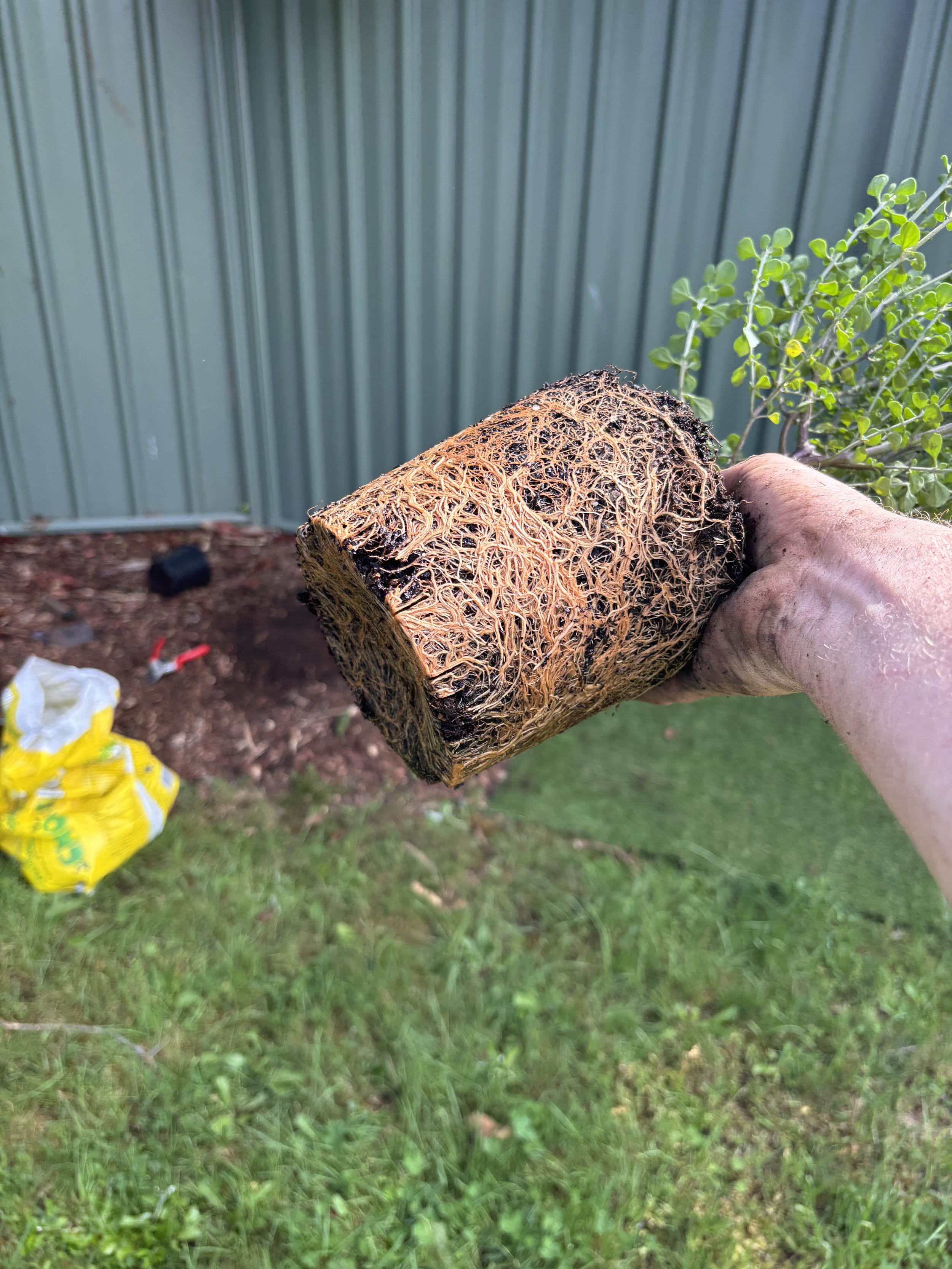
RESULTS
• Stronger root development
• Lower transplant shock
• Better drought resilience